February 28, 2010 – 6:18 pm
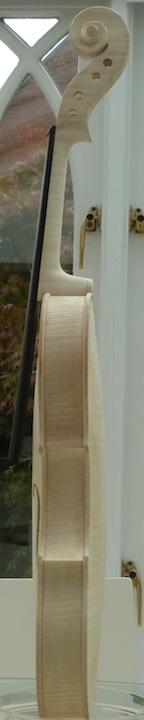
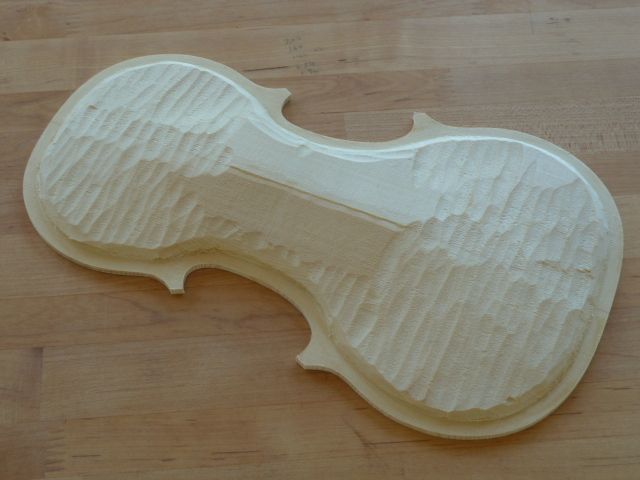
Now that the purfling is installed, we proceed to finish the outside arching of the back. The arching shape has a profound impact on the final tone of the instrument. Over the years I have settled on a particular arching shape for the Strad model that I find reliably produces an instrument with exceptional tone.
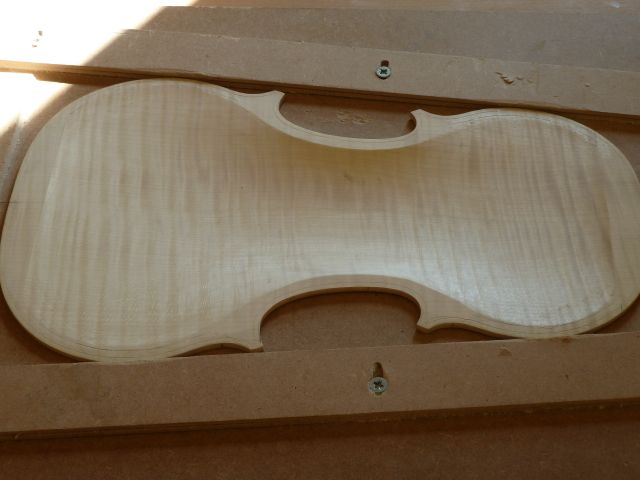
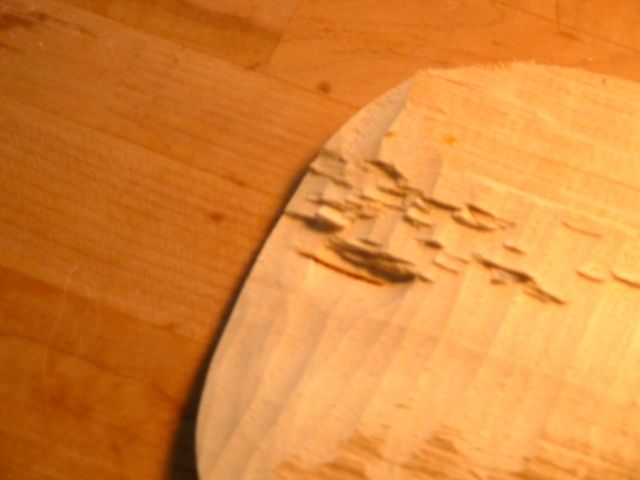
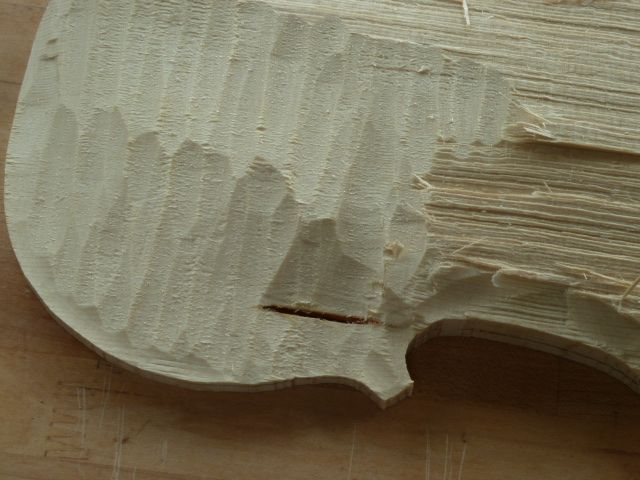
The first step is to rough-in the arching using the chisel.
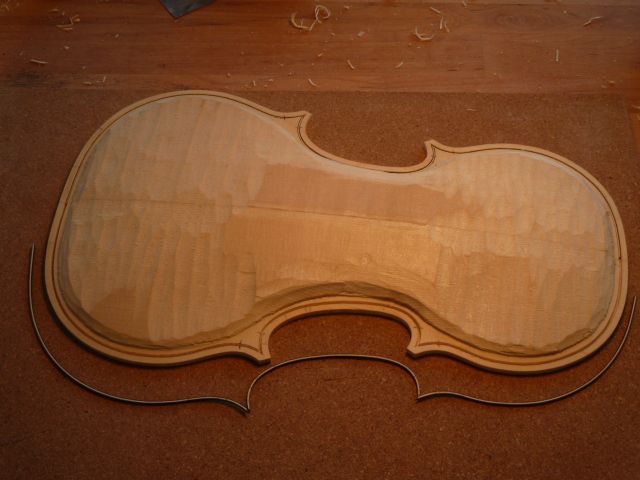
We now move to finger planes and scrapers to refine the arching.
Finally, we use contour lines and scrapers to clean up irregularities in the arching shape.
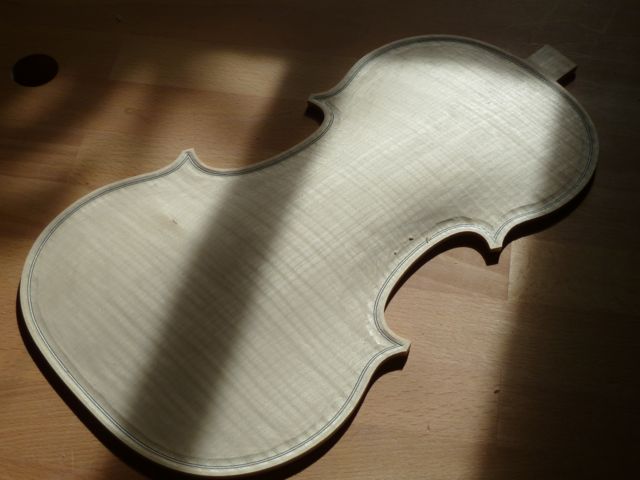
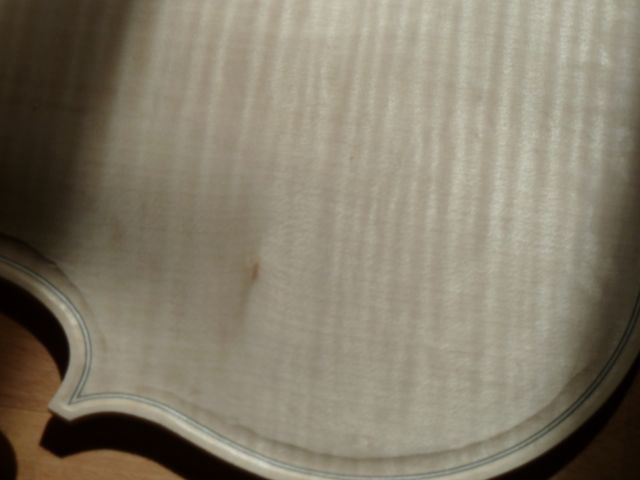
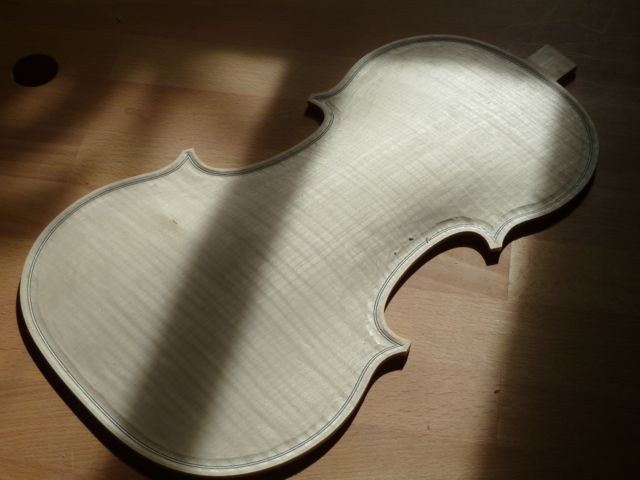
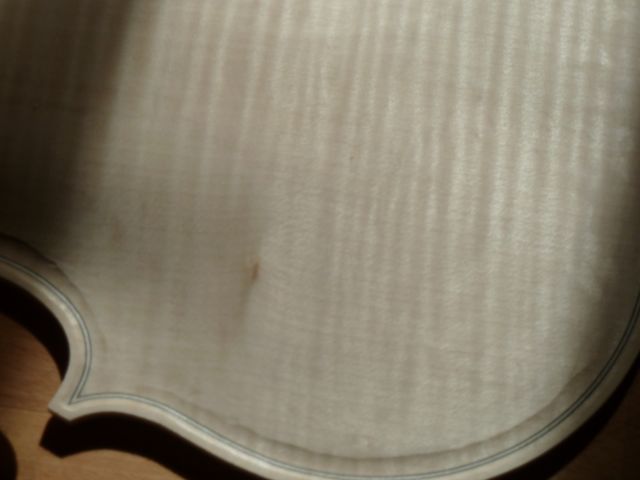
There is a .75mm channel cut all around the instrument at the purfling. The Italians call this the “sgusciatura”.
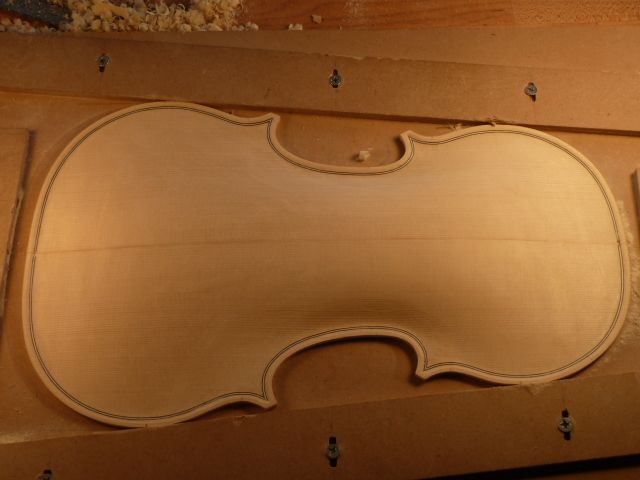
Finally, the arching needs to be brought down a bit and blended into the sgusciatura. Again, contour lines are used to identify irregularities.
Using a low raking light, all irregularities are found and removed resulting in a perfect arching shape.
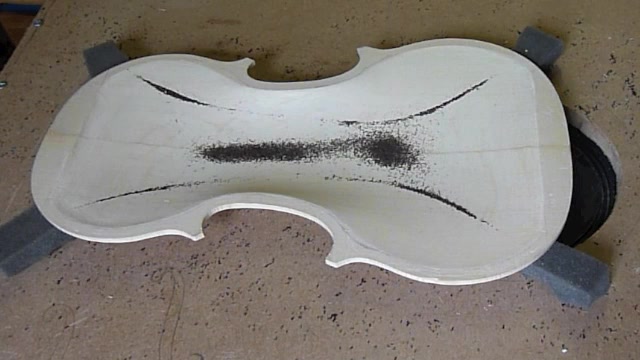
Next, we flip it over and hollow out the inside.
February 22, 2010 – 9:20 am
Now that the aqueous phase of varnishing is complete, it is time to prepare the ground. The purpose of the ground is to provide a smooth base for the colored varnish and to prevent the varnish from penetrating the wood.
The first step is to mix some pumice powder into some clear varnish. This is applied to the violin and then rubbed off. This is done twice with some curing time between coats. This step fills the pores of the wood and seals the surface.
Next a thin coat of clear varnish is applied. After it cures, the violin is rubbed down. The ground is now finished.

Next we apply the first color coat.
February 9, 2010 – 9:22 am
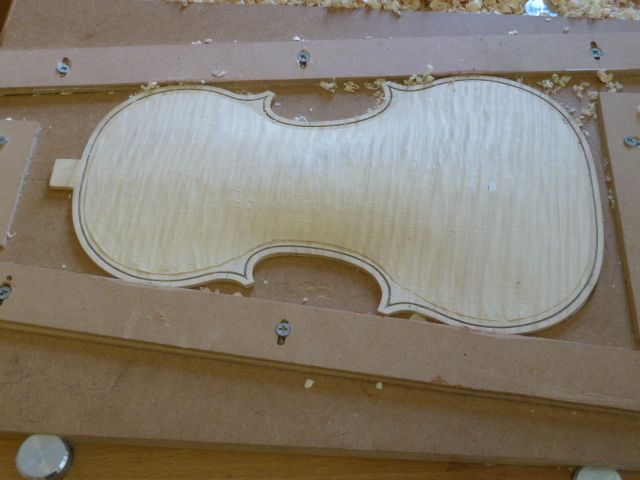
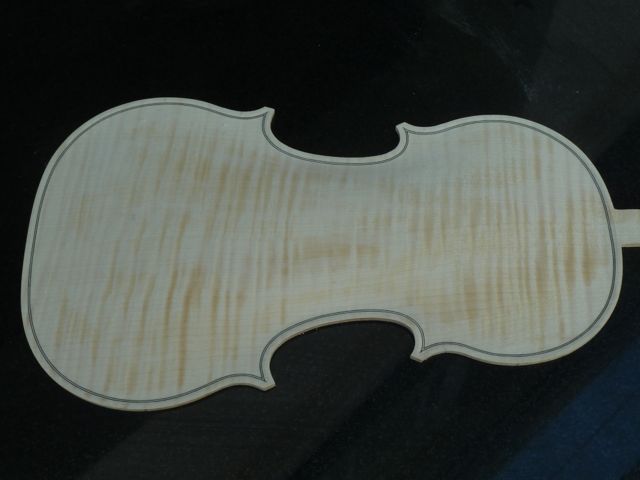
Now that the outline is established and the purfling platform is made, it is time to purfle the back. Purfling is one of the more demanding tasks in violin making. The purfling channel is cut by hand and must fit the purfling exactly all around the instrument. The purfling strips must be bent and cut to form a perfect miter at the corners.
The first task is to mark the purfling channel with a purfling tool. This tool scribes two lines 1.3 mm apart and 4mm in from the edge of the back.
Next, with a very sharp knife and a purfling picker, the channel is cut slightly more than 2mm deep.
Finally the strips of purfling are bent and cut to length. The miters are formed in the corners. The pieces are glued into place.
Next we finish the outside shape of theback.
February 1, 2010 – 3:24 pm
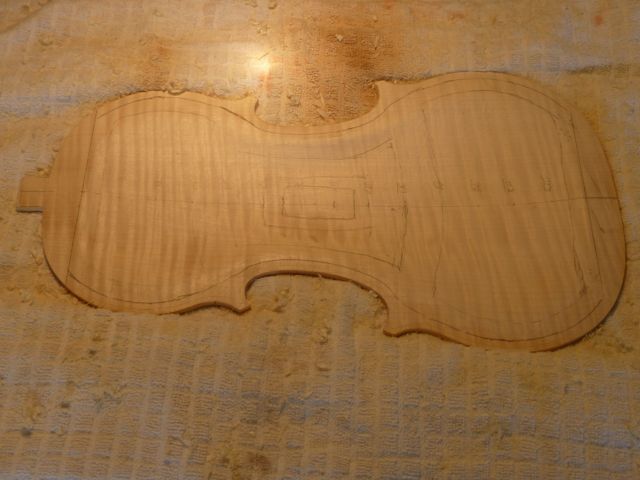
Now that we have the back joined, we need to draw and cut the outline and establish a platform for the purfling.
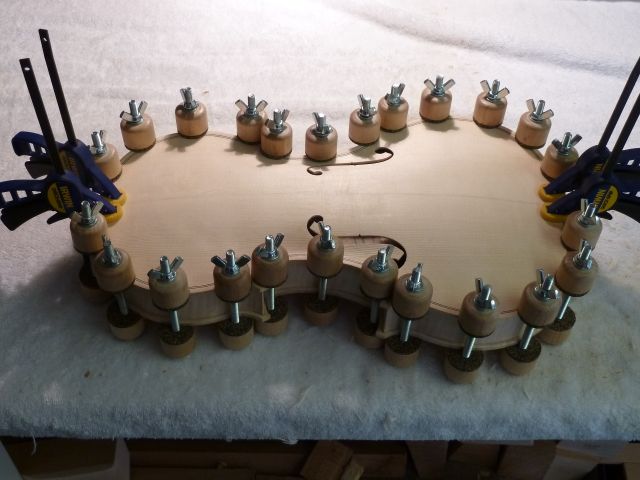
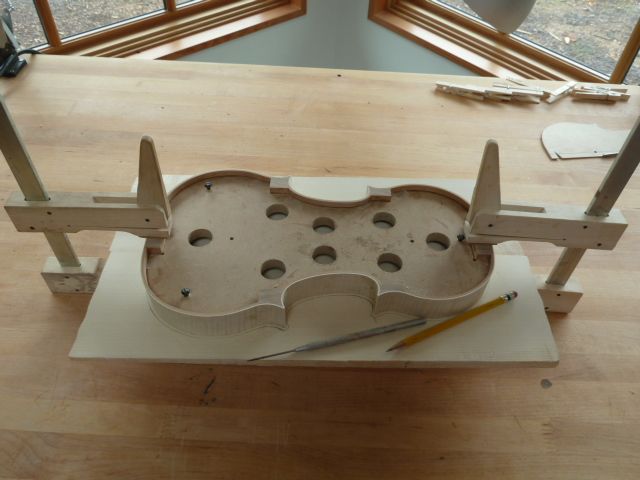
We draw the outline by clamping the rib assembly on the back and tracing the rib outline about 3mm proud.
The outline is then cut out.
Now, obviously we have an excessive amount of unneeded wood. Before finishing the outline and establishing the purfling platform, we will rough in the arching.
Finally we finish the outline exactly and establish a purfling platform a little more than 4mm thick all around the back. The back is now ready to be purfled.
January 28, 2010 – 4:05 pm
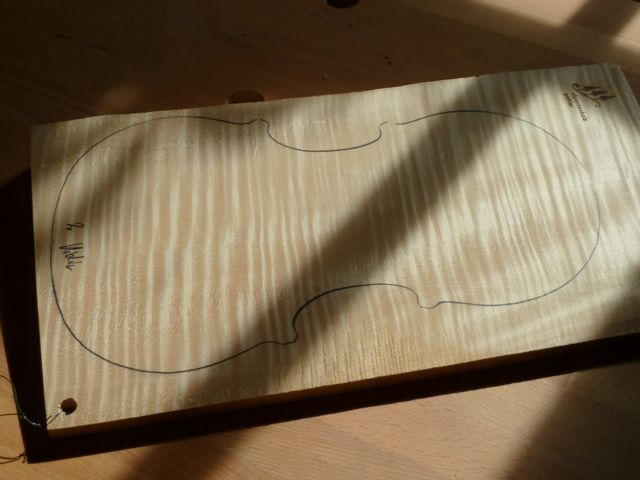
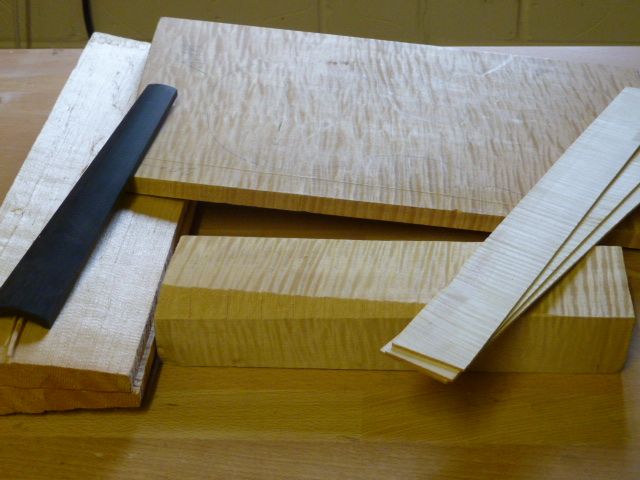
The next step for “The David” is to make the back. We start with some quite nice Bosnian maple.
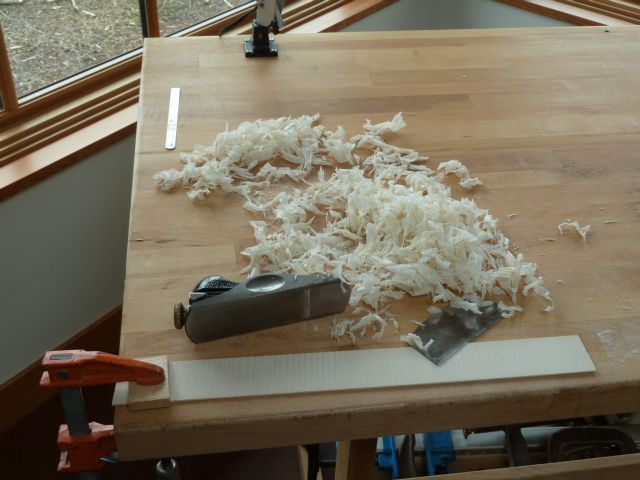
We need to flatten the under side with a plane and then plane the edges which will be glued together. This joint needs to be perfectly flat along its entire length and square to the under-surface. A very sharp and finely tuned plane is required for this step.
With the joint prepared, hide glue is applied and allowed to sit over night. We now have a joined back and can draw the outline and begin the shaping.
January 12, 2010 – 8:26 am
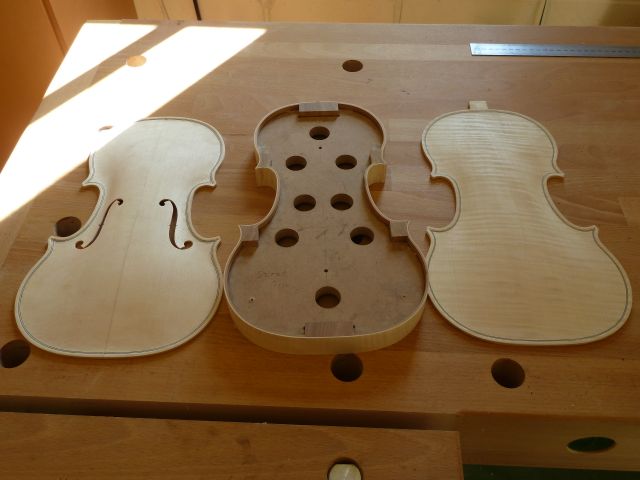
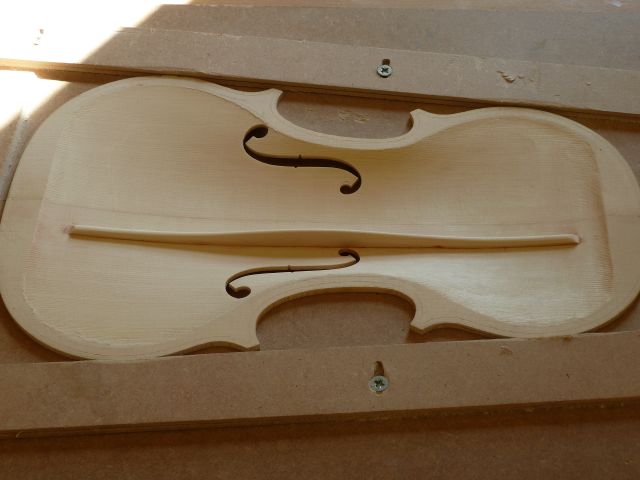
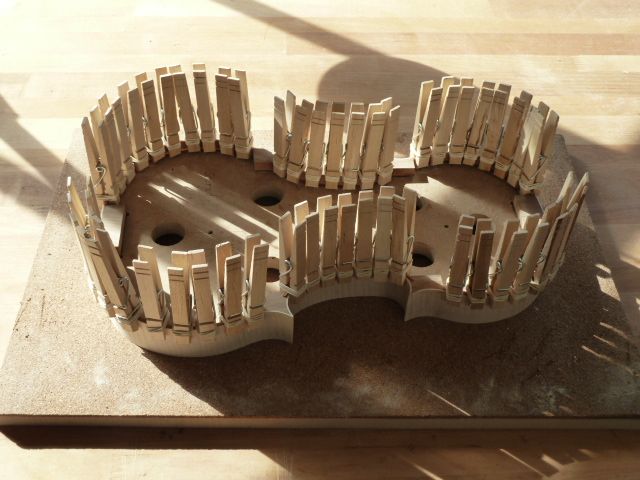
The next step with the rib assembly is to install the linings. The linings provide additional strength to the ribs and also provide a larger gluing surface for the top and back. When completed the rib assembly will be quite flexible yet amazingly strong.
To begin the process, I split pieces of straight-grained spruce and plane the pieces to a dimension of 2mm thick and 8mm wide. The lengths are left oversized. I also cut mortices into the blocks to accept the c-linings. The other linings will just have butt joints to the blocks.
The next step is to bend the linings and trim them to length. Bending is quite easily accomplished using a hot bending iron and a little steam. The shape must exactly fit the outline so that there is little to no tension introduced. The trimming to length has to be exact and is best approached slowly.
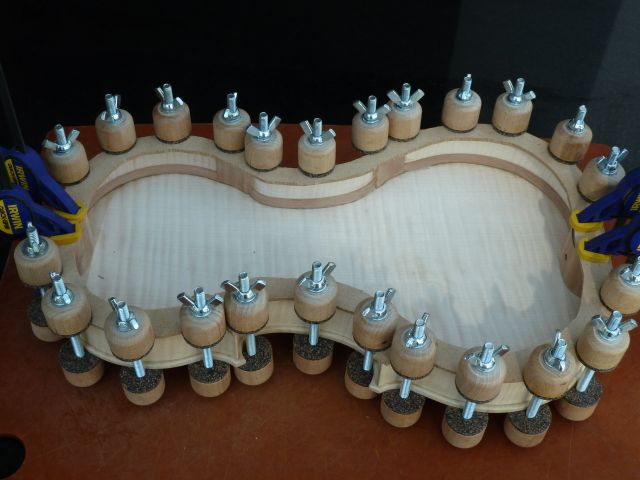
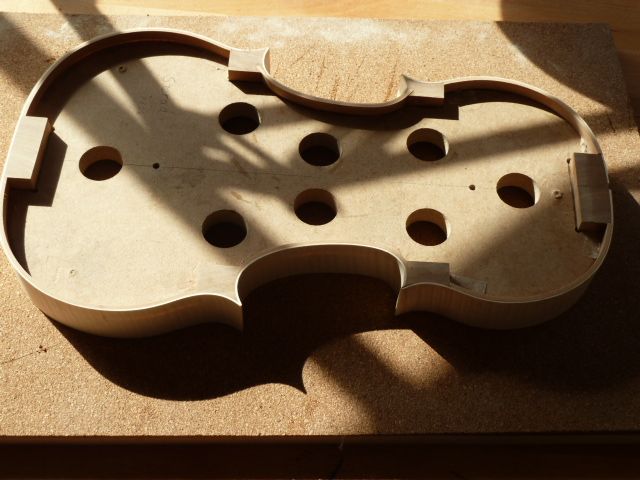
The linings are now glued into place. The ribs and linings are glue-sized and then glued into place. The clamps are just clothes-pins re-enforced with rubber bands. The linings are just slightly proud of the ribs. The whole assembly will be flattened on a shooting board.
The finished rib assembly. Next we make the back.
December 17, 2009 – 5:21 am
After developing a beautiful tan, it is time for “The Lyric” to get a bath. This is the aqueous phase of the ground preparation. The first step is to apply a coat of a 3% gelatin solution. I do this to seal the end-grain in order to prevent uneven absorption of the stain color. Next I apply a water based stain to the whole violin. This enhances the contrast between the winter and summer grain a gives the instrument a nice orange/cinnamon color. The result is:

December 1, 2009 – 3:22 pm
I recently received a commission for a new violin. This thread will document the process of making “The David”.
The customer requested a new violin made to my Strad pattern. Together, we went through my wood supply and picked out the wood for the instrument. The spruce is Italian and the maple is Bosnian. Both pieces are over 10 years old. The blocks are some very straight grained Sitka spruce that I found in Canada.
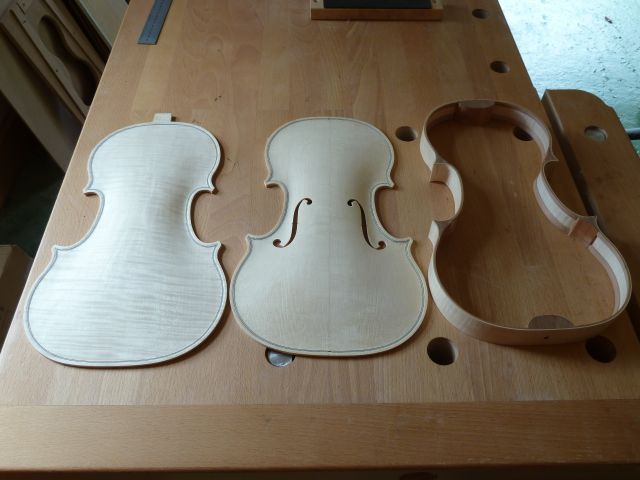
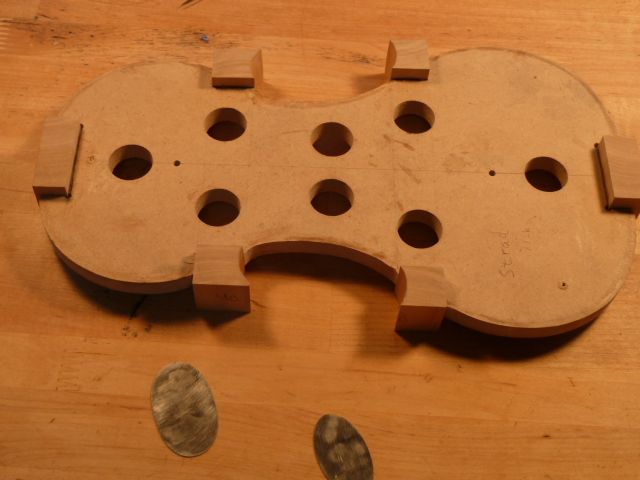
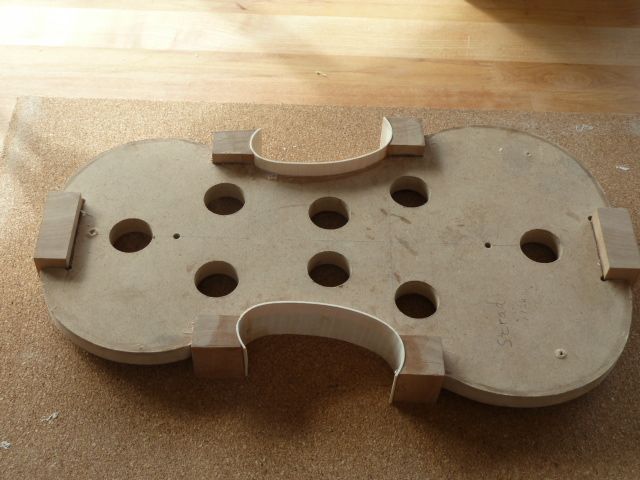
The first step is to trim the blocks to size and spot glue them to the form.
The next step is to draw the outline on the blocks.
Next, we have to plane and scrape the rib material down to a thickness of about 1.2 mm.
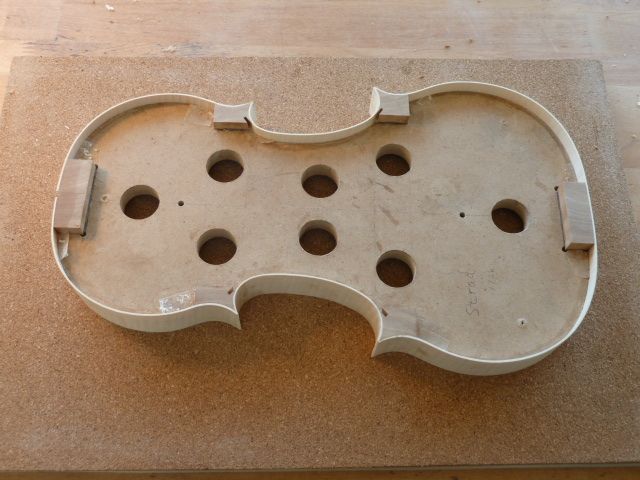
Finally, we then trim the blocks to accept c-bout ribs, bend the ribs to shape and glue them in place.
Now we trim the other blocks to accept the bent ribs.
Finally, the finished ribs.
November 26, 2009 – 10:06 am
“The Lyric” was a great success. The tone is beautiful and it has great carrying power. In the hands of the owner, it is a truly wonderful sound to behold. After much wrangling, I was able to get the instrument back for the varnish job.
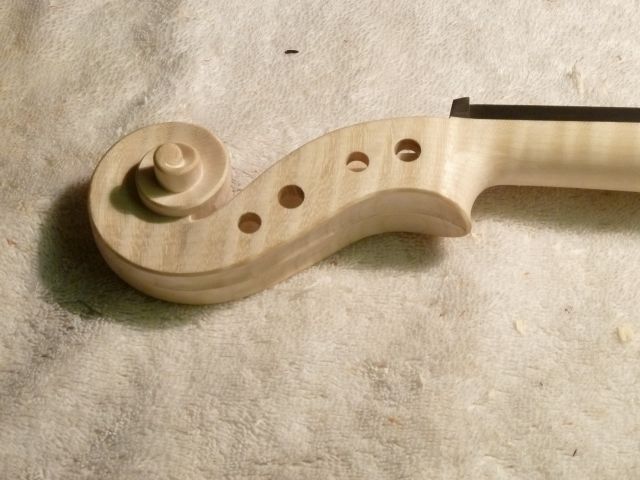
The first step is to take the setup down, remove the finger board and glue on a temporary protective board. I then scraped the instrument and took one more pass on the edge work and the chamfer on the scroll. Here it is, ready for the varnish process.
The next step in the process is to give the violin a nice suntan. I do this by placing the instrument in an ultra-violet light box and by exposing it to some morning sun. This step usually takes a week or more. Here is “The Lyric” in the light box.
“The Lyric” gets a few rays of morning sun. Now she is ready for application of the ground.
November 4, 2009 – 1:17 pm
I often get asked what strings I recommend for violins and violas. Unfortunately the answer is, “It depends”. Most importantly it depends on your instrument. A warm sounding instrument might need brighter sounding strings in order to boost projection. Conversely, a bright sounding instrument might need to be warmed up a little.
The next thing to consider is what I will call your style of play. If you play and electric or amplified instrument, the strings really don’t matter. EQ has much more effect on your sound than strings ever will. I often suggest to my young or inexperienced players that they use steel-core strings. The main reason is that with steel-core strings you can put fine tuners on all four strings and it makes tuning much easier (this also applys to players that have worn out or poorly adjusted pegs). Most other players should consider one of the synthetic core strings that are available. Baroque and period players, however, like the sound and feel of gut strings
That said, I will give my impressions of strings I am familiar with.
Steel Core - My favorite steel core strings are Thomastik Spirocore. I think these give good tone (similar to Dominants) on a variety of instruments and are very stable.
Synthetic Core - Thomastik Dominants are a good all around choice for a wide range of instruments. I think these are the best price/performance strings available. My favorite strings for tone and projection are Pirastro Obligato with a gold E-string. These have a wonderful tone on most instruments, are well balanced and very stable. I generally don’t like the new Thomastik Visions. On most instruments that I have heard they just have too much scintillation (I can’t think of a better word). I have never seen and instrument that can handle Evah Pirazzi strings. The G and D can be good but the A is just awful. For viola I like (as well as most of my professional customers) Obligatos with a Larsen A. Larsen really nailed the viola A string.
Gut Core - I don’t have much experience with gut strings. For most instruments the synthetic core are superior performers. I do have experience with Oliv and Eudoxa. I may prefer the tone of Eudoxa on the instruments I have tried them on.
One final word for players who have really fine old instruments. Quite often theses instruments, due to crack repairs and sound post patches, have an unbalanced tone. This can usually be largely overcome by mixing and matching strings. This is a time consuming and expensive exercise but usually well worth it.