Monthly Archives: March 2010

“The David” - gets a bassbar

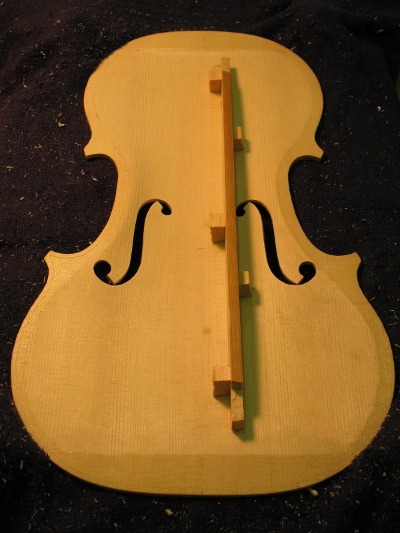
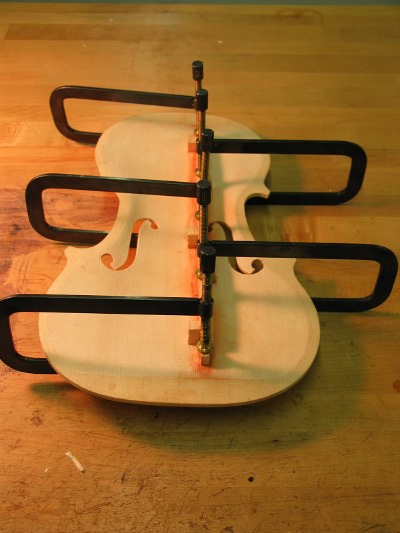
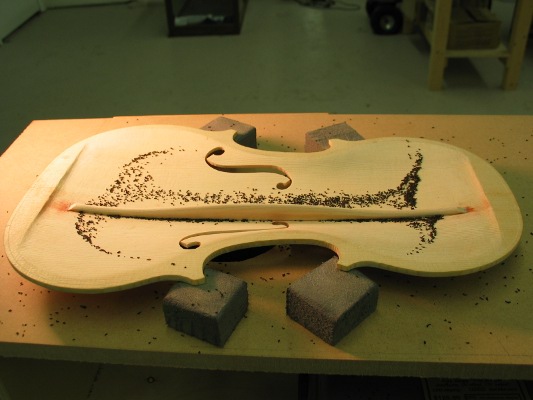
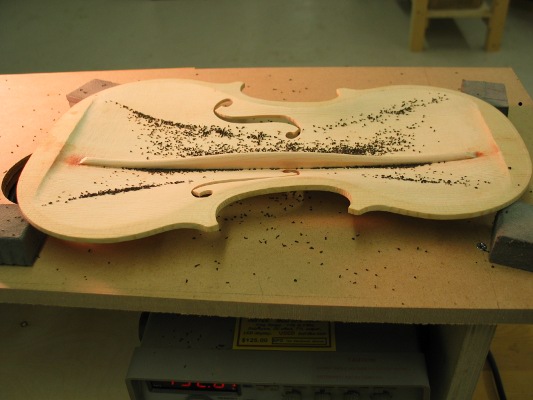
The bass bar is a piece of spruce about 6 mm wide that runs the length of the top underneath the bass foot of the bridge. It provides rigidity for the top and enhances the lower frequencies. Its proper installation is critical to the tone of the instrument.
The first step is to cut a piece [...]

“The David” - gets f-holes

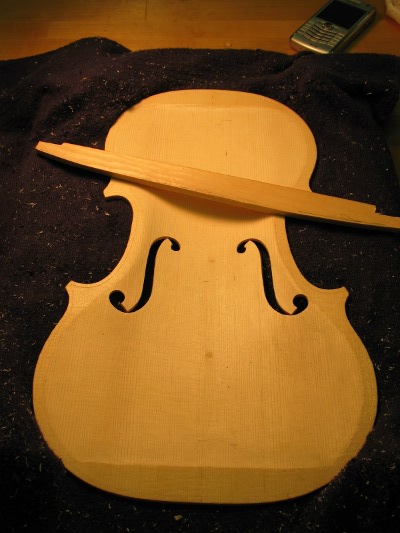
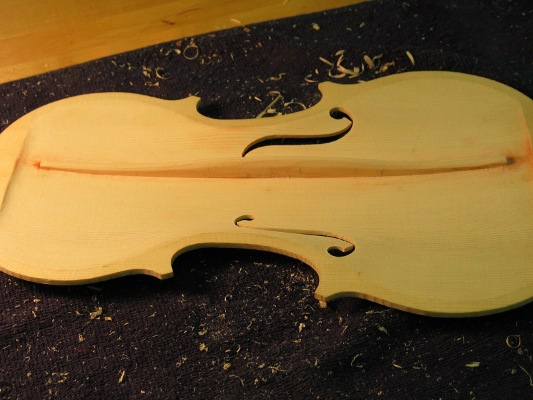
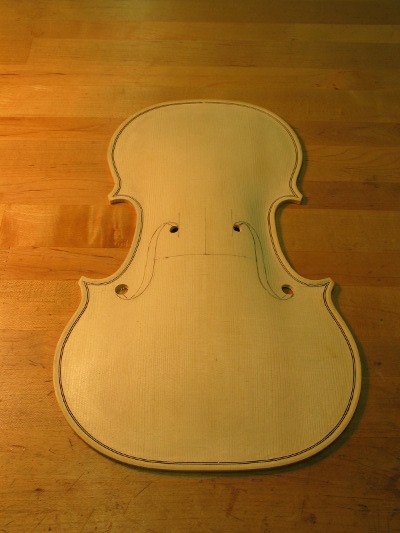
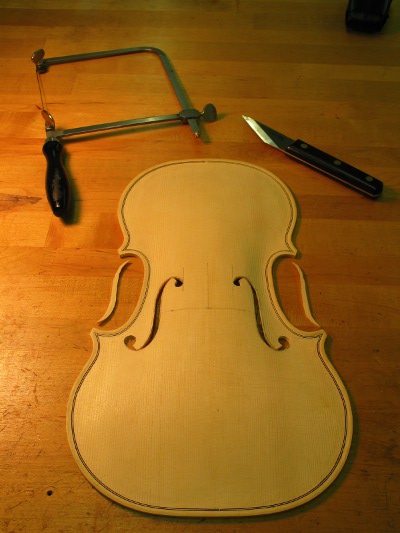
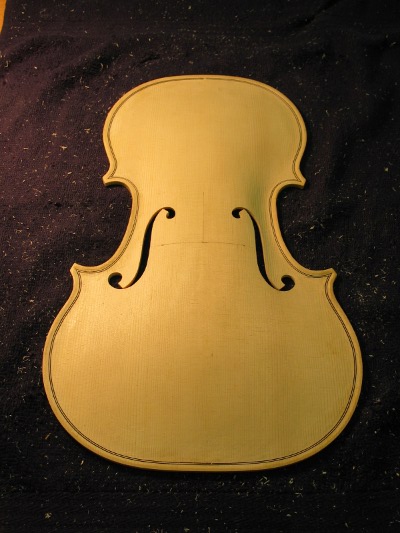
The top is now ready to receive f-holes. The location and size of the f-holes is very critical to the tone and function of the violin. The first step is to accurately locate the holes.
After the holes are located, I cut out the holes.
Then, using a hand saw I cut out the shape of the [...]

“The David” - gets a top (cont.)

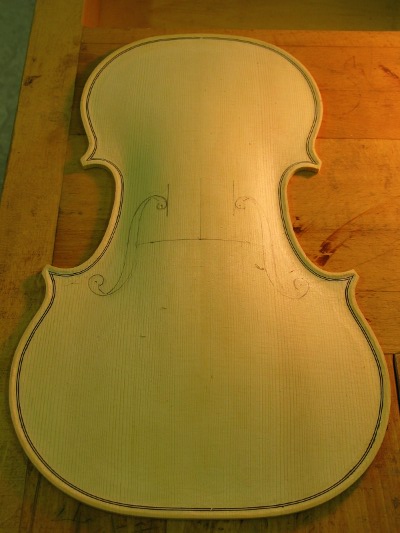
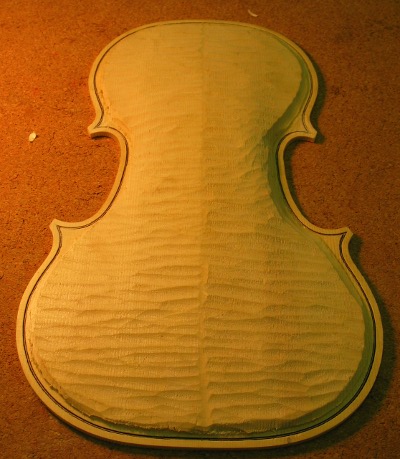
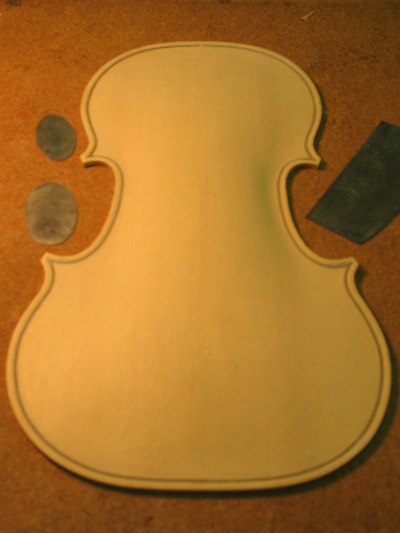
The steps for continuing with the top are the same as for the back. The next step is to cut the purfling channel and install the purfling.
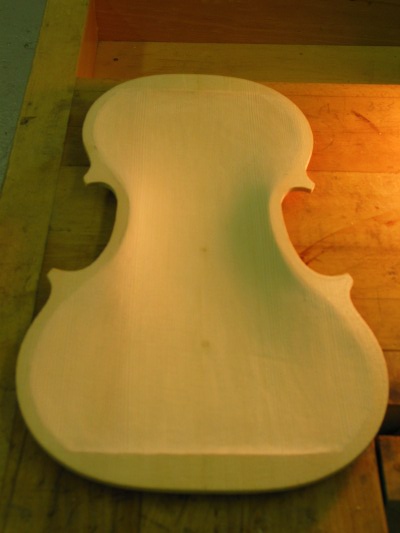
Then using the gouge, we bring the arching down to the level of the purfling.
Now, as for the back, we refine the arching using finger planes and scrapers, cut [...]

“The David” - gets a top

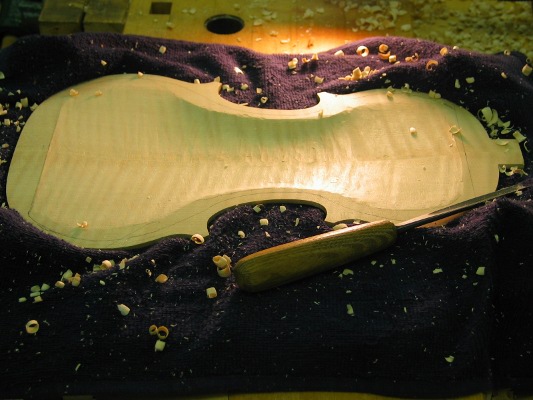
With the back done, we turn our attention to the top. The steps are the same as for the back.
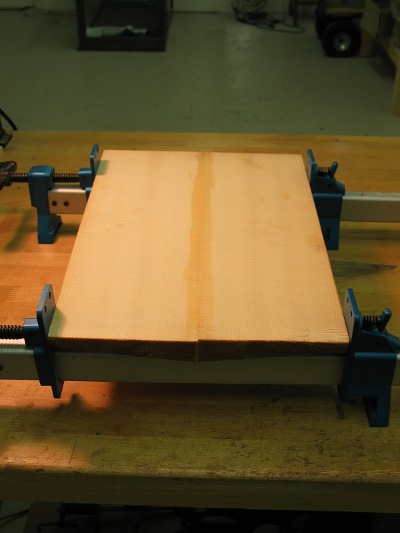
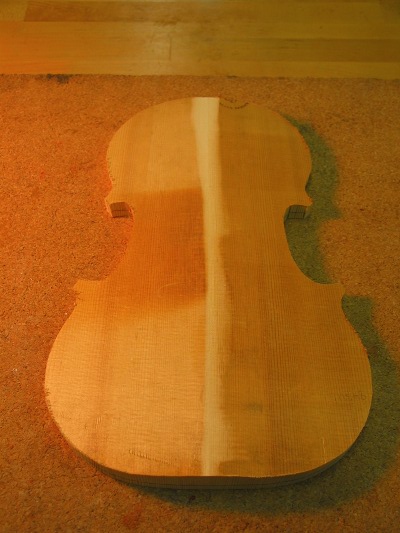
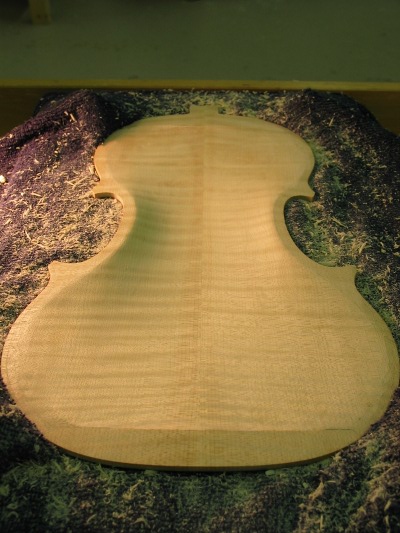
First we glue the pieces together. Again a perfect joint is required.
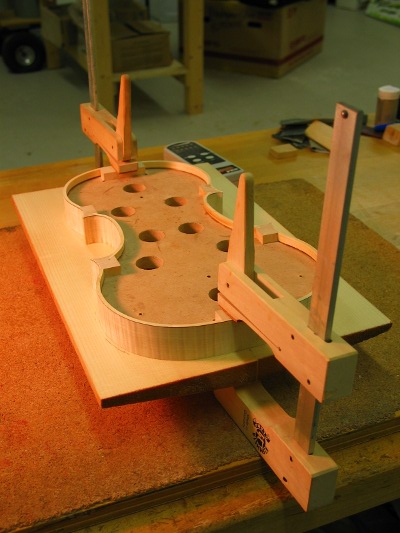
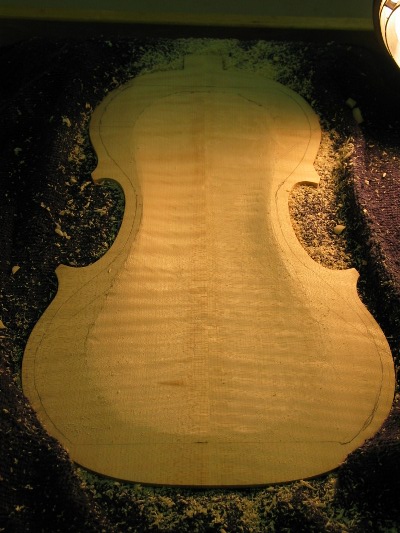
Next we use the ribs to layout the outline.
We saw just outside the layout lines.
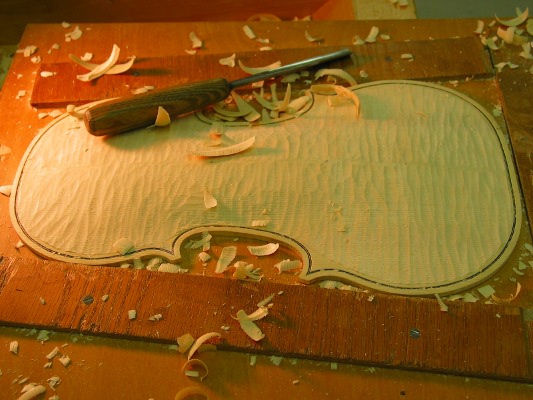
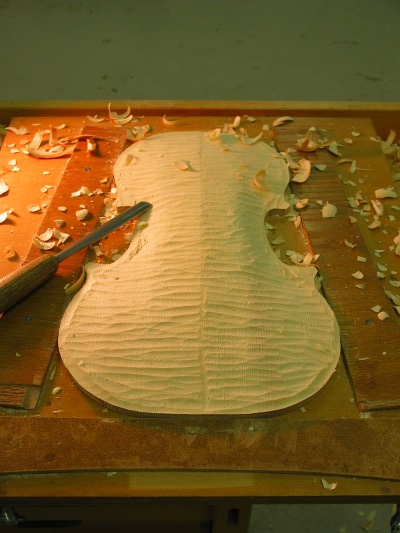
Rough in the arching.
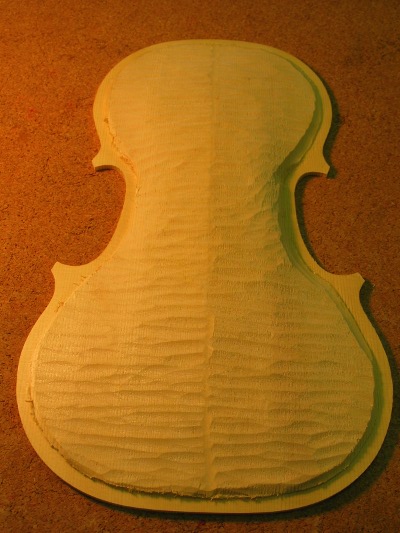
Finish the outline and purfling platform.
we are now [...]

Tuning “The David”

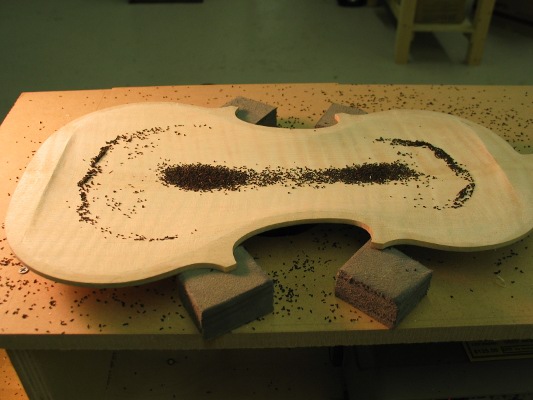
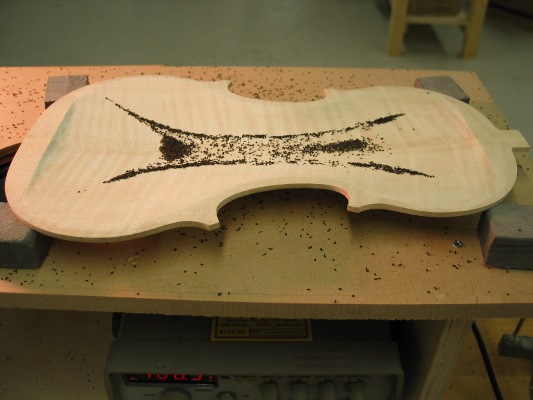
With the thickness of the back carved to nominal values, it is time to tune the plate. We want the plate to vibrate freely but we also want it stiff enough to provide carrying power. These two goals are at cross purposes so we have an optimization problem.
Using the work of Carleen Hutchins, I [...]

Graduating “The David”

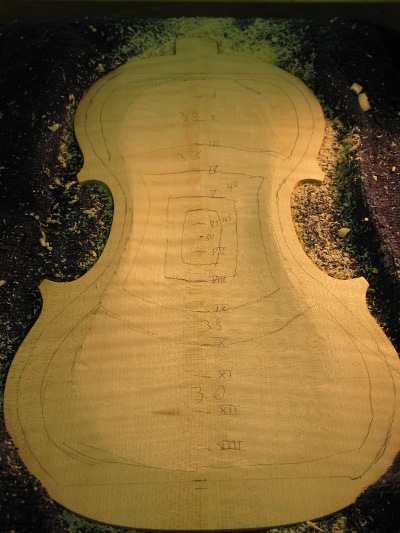
With the outside of the back done, we turn to removing wood from the inside and graduating the plate. The first step is to remove the bulk of the unnecessary wood. I use a gouge and take the entire inside down to a thickness of about 6mm.
Next I layout the graduation pattern. Since this is [...]