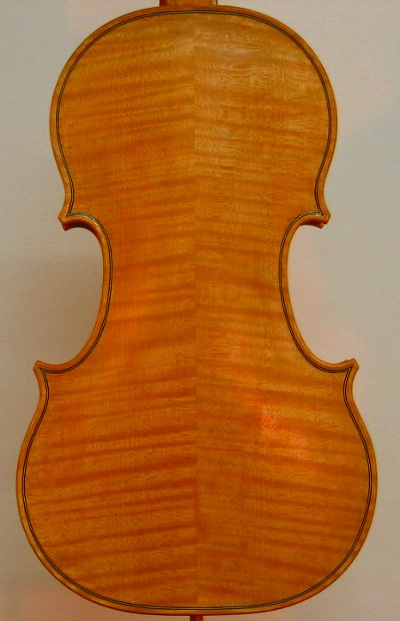
Arching “The David”

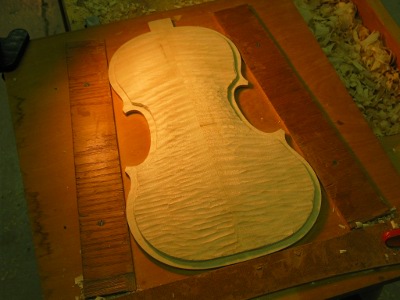
Now that the purfling is installed, we proceed to finish the outside arching of the back. The arching shape has a profound impact on the final tone of the instrument. Over the years I have settled on a particular arching shape for the Strad model that I find reliably produces an instrument with exceptional tone.

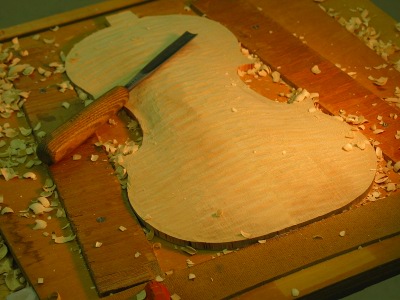
The first step is to rough-in the arching using the chisel.
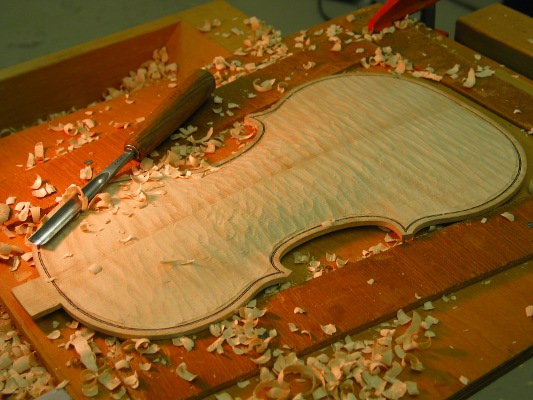
Roughed-in Arching
Roughed-in Arching

We now move to finger planes and scrapers to refine the arching.
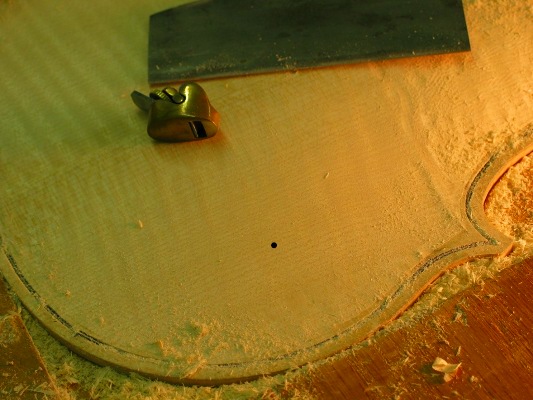
refined arching
refined arching

Finally, we use contour lines and scrapers to clean up irregularities in the arching shape.
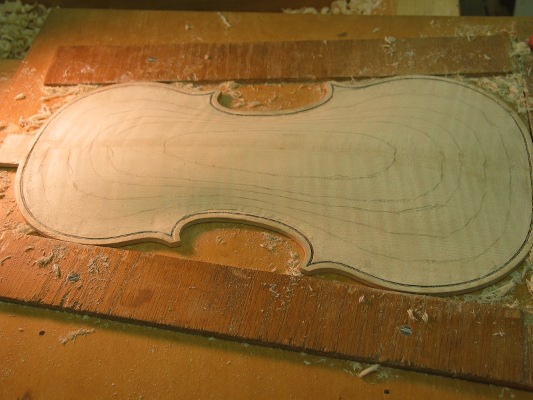
arching clean-up
arching clean-up

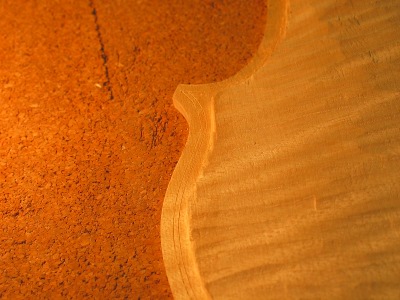
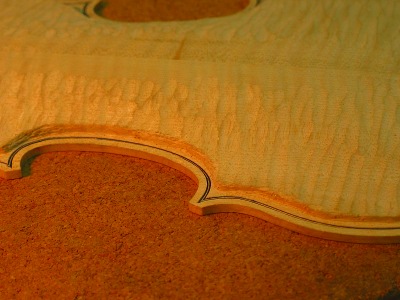
There is a .75mm channel cut all around the instrument at the purfling. The Italians call this the “sgusciatura”.
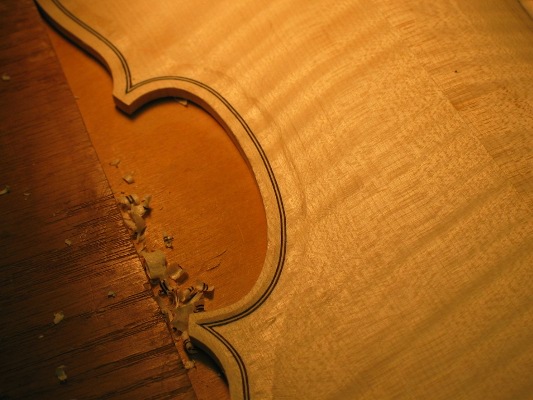
sgusciatura
sgusciatura

Finally, the arching needs to be brought down a bit and blended into the sgusciatura. Again, contour lines are used to identify irregularities.
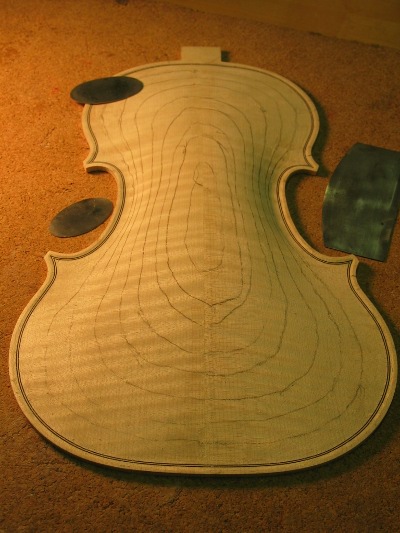
arching blended into sgusciatura

Using a low raking light, all irregularities are found and removed resulting in a perfect arching shape.
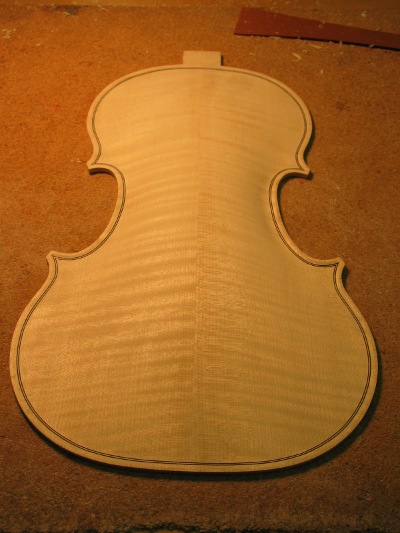
outside arching finished

Next, we flip it over and hollow out the inside.
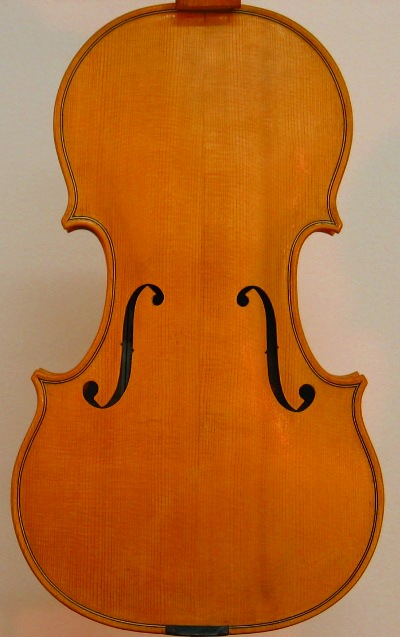
“The Lyric” – is grounded

Now that the aqueous phase of varnishing is complete, it is time to prepare the ground. The purpose of the ground is to provide a smooth base for the colored varnish and to prevent the varnish from penetrating the wood.

The first step is to mix some pumice powder into some clear varnish. This is applied to the violin and then rubbed off. This is done twice with some curing time between coats. This step fills the pores of the wood and seals the surface.

Next a thin coat of clear varnish is applied. After it cures, the violin is rubbed down. The ground is now finished.

ground - front
ground - front
ground - back
ground - back

Next we apply the first color coat.

“The David” – purfling the back

Now that the outline is established and the purfling platform is made, it is time to purfle the back. Purfling is one of the more demanding tasks in violin making. The purfling channel is cut by hand and must fit the purfling exactly all around the instrument. The purfling strips must be bent and cut to form a perfect miter at the corners.

The first task is to mark the purfling channel with a purfling tool. This tool scribes two lines 1.3 mm apart and 4mm in from the edge of the back.

Marking the purfling channel

Next, with a very sharp knife and a purfling picker, the channel is cut slightly more than 2mm deep.

Cut purfling channel

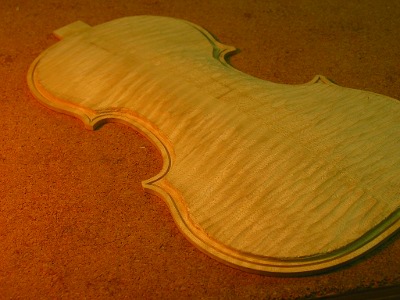
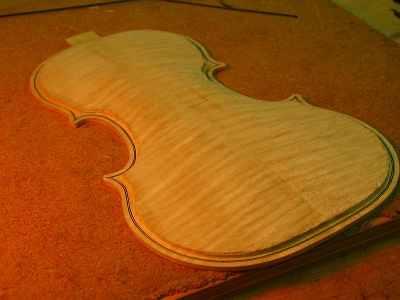
Finally the strips of purfling are bent and cut to length. The miters are formed in the corners. The pieces are glued into place.

Purfling installed
Purfling installed
A closer view
A closer view

Next we finish the outside shape of theback.

“The David” – gets a back (cont.)

Now that we have the back joined, we need to draw and cut the outline and establish a platform for the purfling.

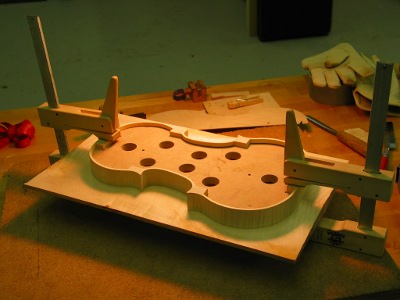
We draw the outline by clamping the rib assembly on the back and tracing the rib outline about 3mm proud.

david- back layout
david- back layout

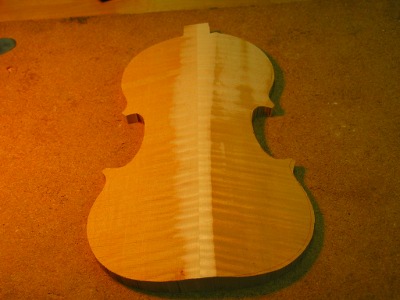
The outline is then cut out.

david back cutout
david back cutout

Now, obviously we have an excessive amount of unneeded wood. Before finishing the outline and establishing the purfling platform, we will rough in the arching.

david rough arching
david rough arching

Finally we finish the outline exactly and establish a purfling platform a little more than 4mm thick all around the back. The back is now ready to be purfled.

purfling platform
purfling platform
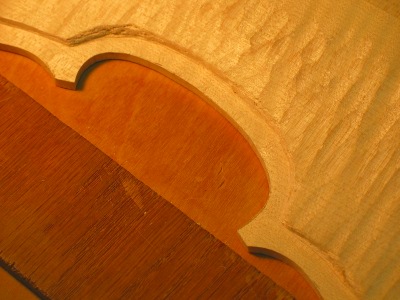
close-up of the C's
close-up of the C's