“The Terry” – making the top (first try)

The next step in the process is to make the top plate for the violin. After the two halves of the top are joined, we use the rib assembly to establish the outline of the violin.
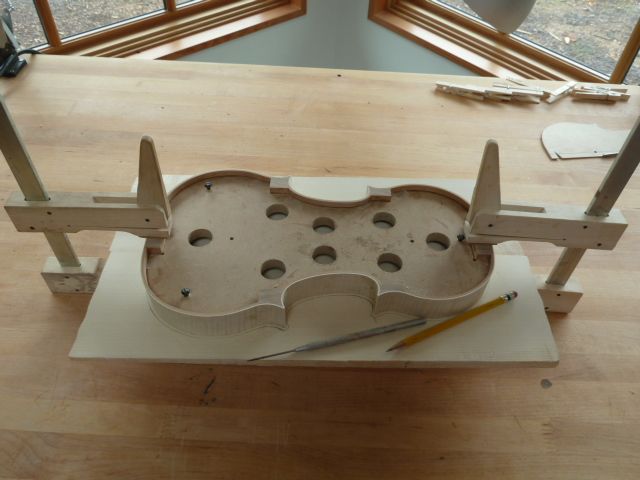
I trace around the rib assembly with a washer that offsets the outline by about 3 mm. I then cut out the top just out side of this line. The next steps are to remove a lot of the excess wood by roughing-in the arching. This is followed by forming the outline by just removing the pencil mark and then forming a purfling platform in which to install the purfling. That was the plan. Sometimes things don’t always go according to plan.
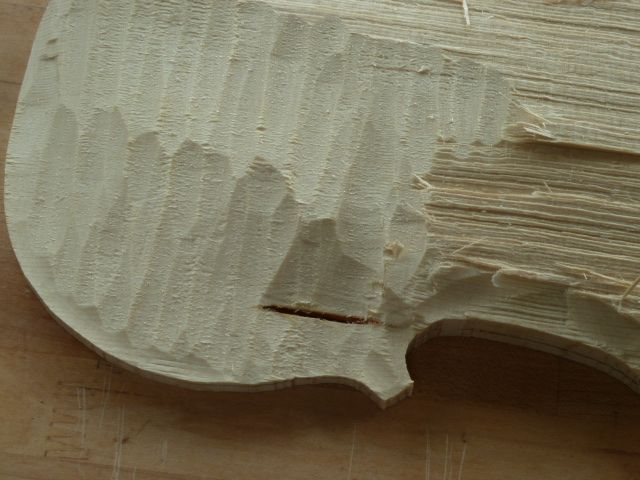
As I was removing waste wood a large sap-filled void revealed itself. It was too deep to be removed. There is nothing left to do but start over. As I have left my wood supply back in London, I was in a real bind. Fortunately, there is another violin maker on the island (Towner McLane) who kindly came to my aid by supplying me with another piece of top wood. Violin makers are really nice people!

I proceeded to join the new top. While that dries, I will go ahead and work on the back.

“The Terry”

Terry Chang

I am starting a new violin, “The Terry”. This is commission from Terry Chang. Terry is a lovely young violinist for whom I made a bow for some years ago. She recently re-connected with me through my web page and commissioned a Strad model violin. My new studio is complete on Lummi Island so I decided to build this instrument there. Hopefully the beautiful views will inspire me to make an exceptional instrument.

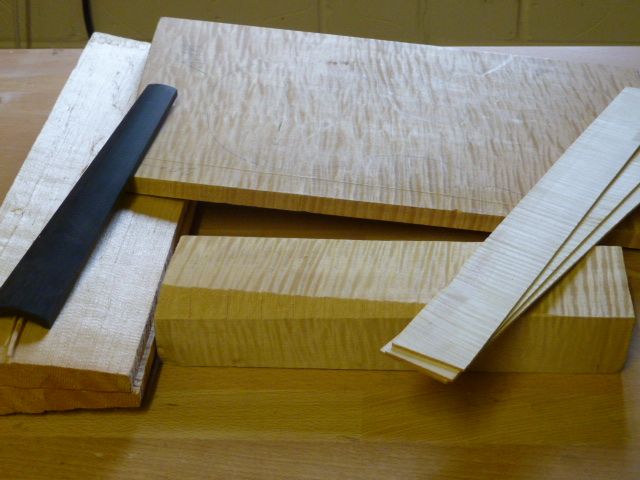
Terry chose a one-piece back of beautiful quilted maple. It should be quite nice when it is done. We also have a nice piece of Italian spruce as well as ribs and a neck of nicely flamed maple that should compliment the back nicely.

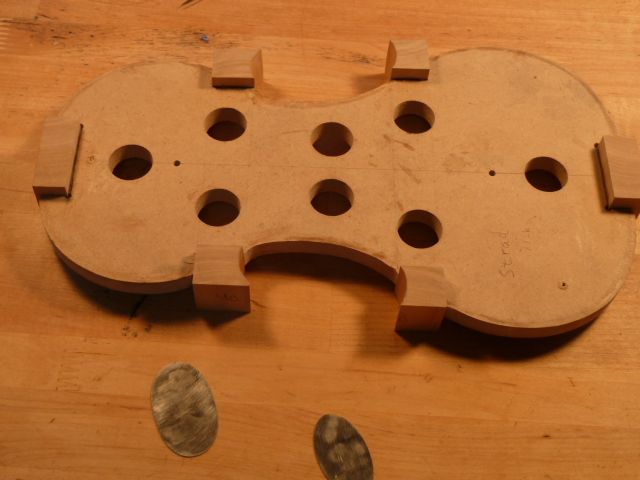
We will start with the rib assembly. Willow blocks are cut and glued to the mold. The blocks are then shaped to the outline of the violin. We start with the C-blocks first.

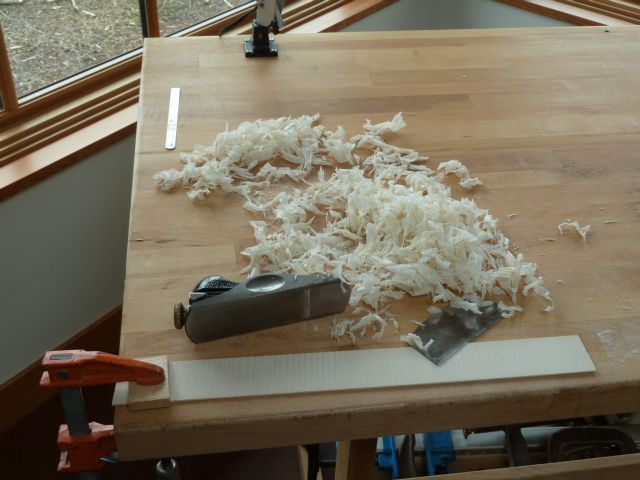
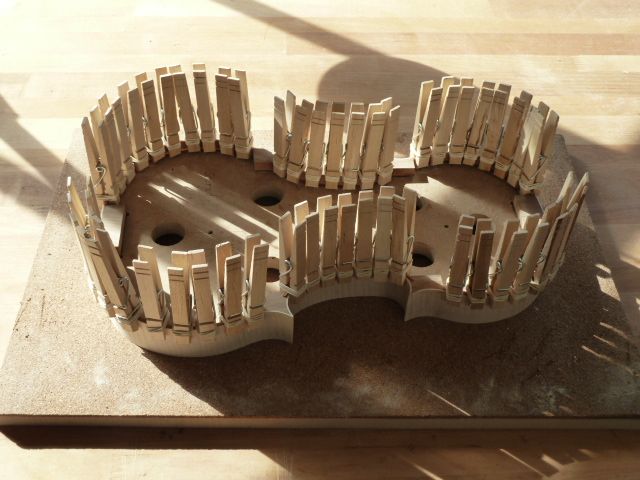
The ribs are planed and scraped to a thickness of about 1.1 mm, bent and glued to the blocks.

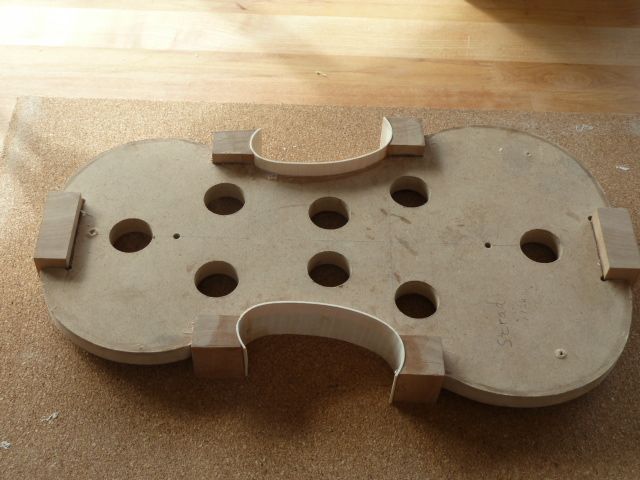
We do the same with the other ribs and blocks and inlet the C-blocks to receive the linings.

Linings are the cut and bent and glued to the ribs.

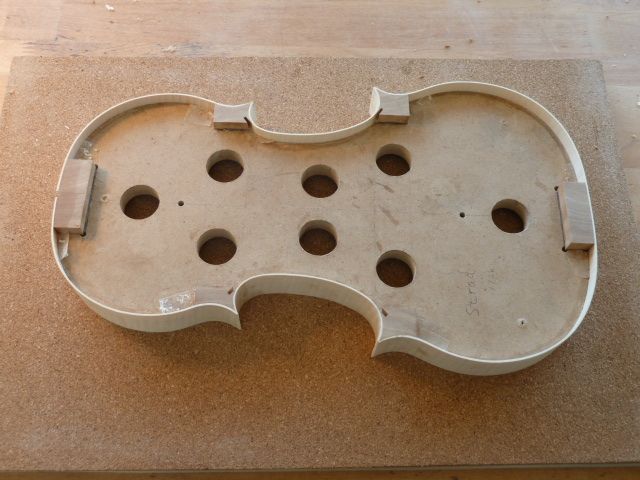
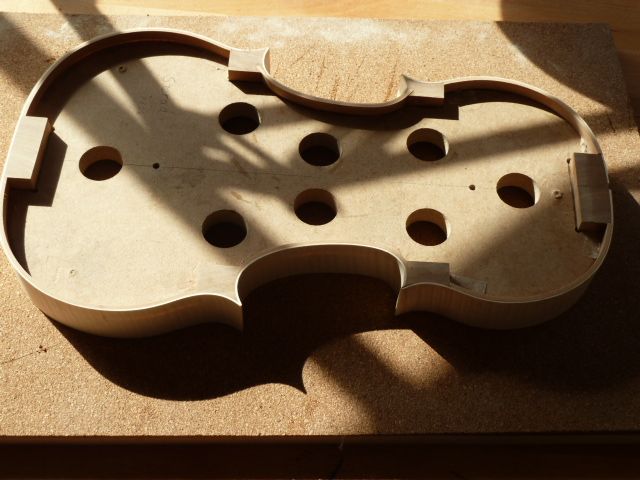
We now have a finished rib assembly. We will use this rib assembly to establish the outline for the top plate in the next step.