“The Edward” – is born

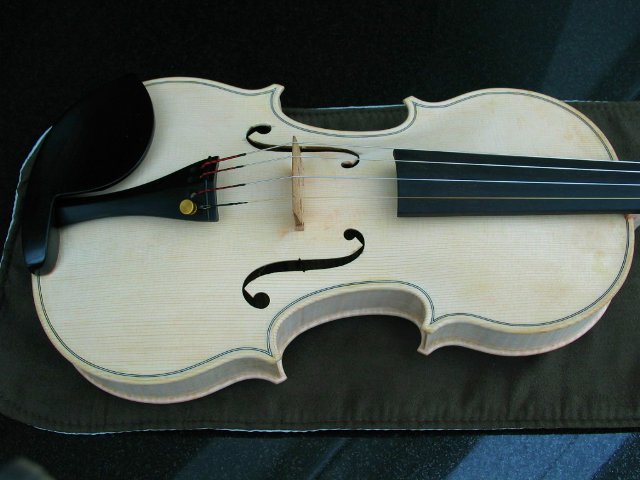
After gluing in the neck, we can finish off shaping the neck, heel and button. We then do the set-up, which involves making and installing the saddle, reaming the holes for the pegs and the button, cutting a sound post and bridge and finally stringing it up.

I never ceased to be amazed at how the tone of a new violin changes over the first few days as the stresses relieve and the instrument “gets used” to being a violin. When I first play it, it never sounds very good. You can tell whether it is going to be good or not but it is very hard to resist fooling around with the set-up to see if you can make it better. After 45 minutes, the tone improves 100%. Everything starts opening up a little bit. After several hours it is like a different instrument. This goes on for several days until the tone finally starts to stabilize.

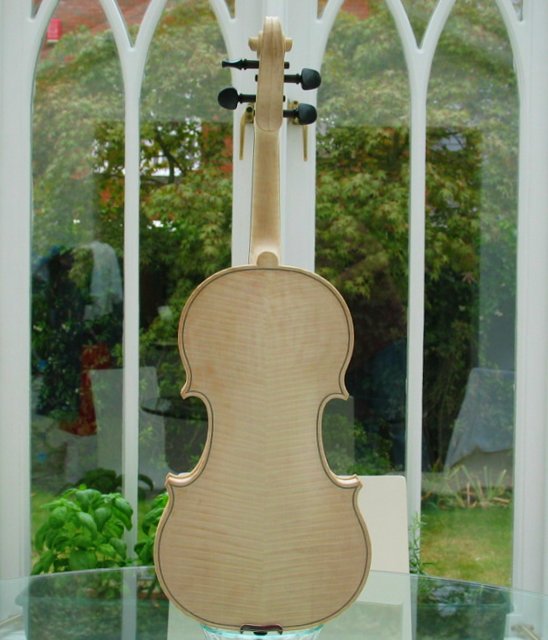
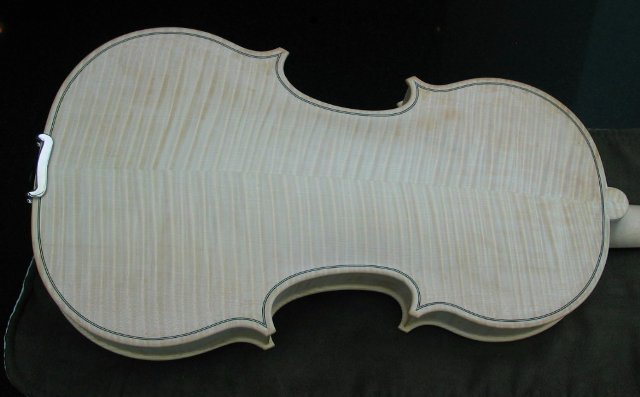
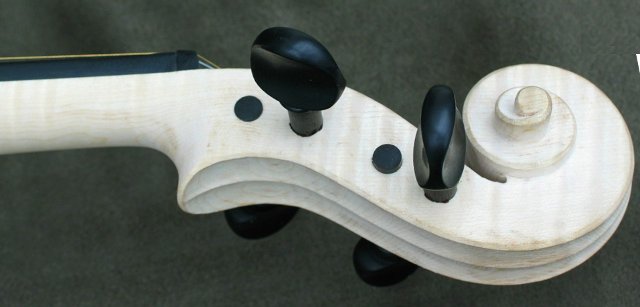
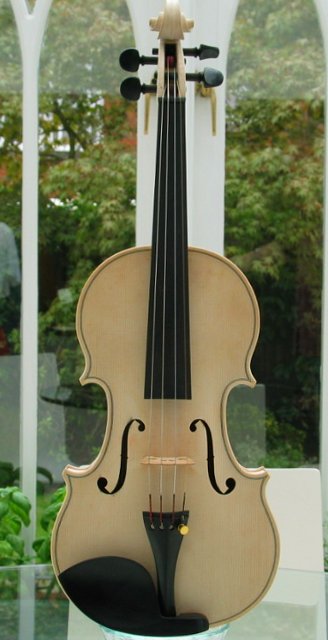
It has been about a week now and I have to say “The Edward” is amazing! Maybe the best ever. The tone is full and powerful and very even across all of the strings. I can’t stop playing it. I’ll leave it in-the-white for a couple more weeks while I work on a bow commission but then I will take it down and varnish it. Below are some pictures of the completed instrument.
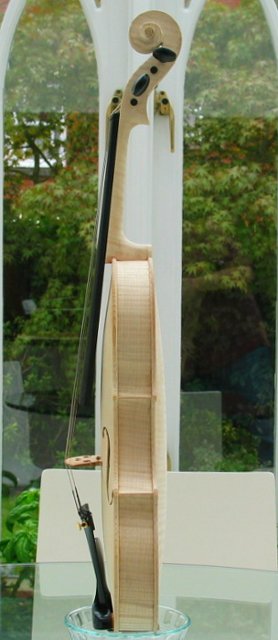
close-up scroll

I am very pleased and I’m sure Ed will be as well.
“The Edward” – getting a handle on it

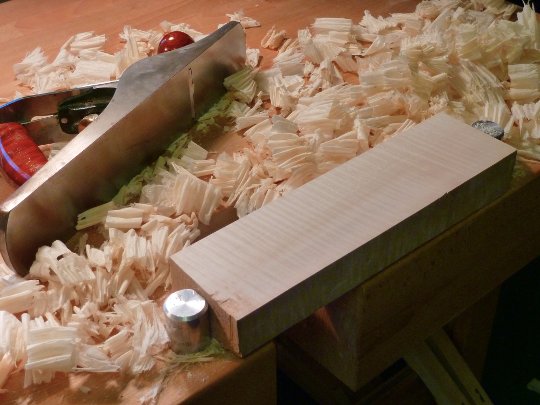
With all of the pieces made and the body assembled, it is time to make a neck for “The Edward”. The first step it to plane the neck block so that the width is 42 mm and the two sides are perfectly perpendicular to the face.

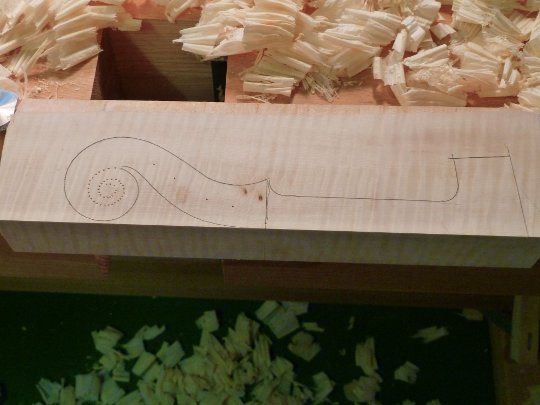
Then using our template we layout the neck on the block.

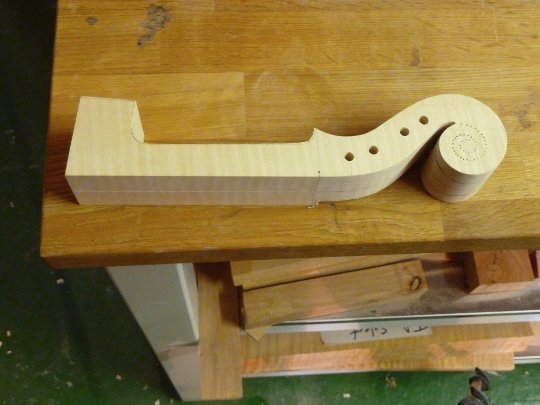
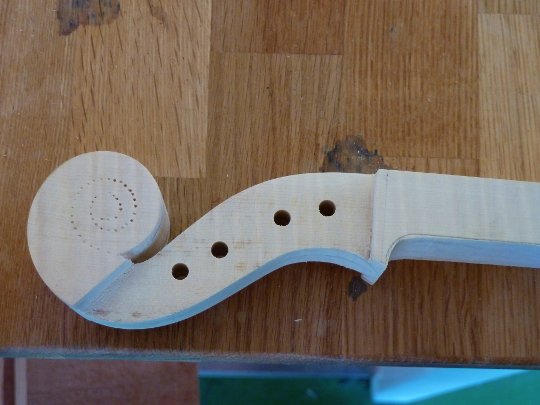
Using the bandsaw and the drill press we cut out the outline of the neck and drill the peg holes. Using knives, chisels and files we clean up the cut-out. We are now ready to carve the scroll.

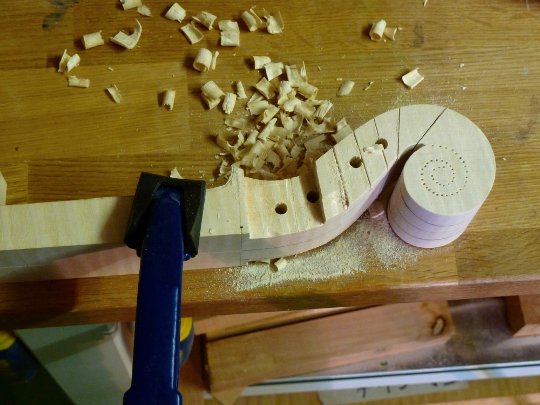
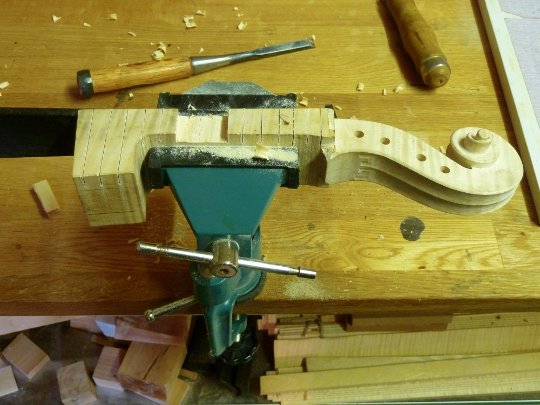
The first step is to remove the waste on the outside of the peg box. We first use a saw and chisel to remove the waste wood.

Then the whole thing is then cleaned up to the line.

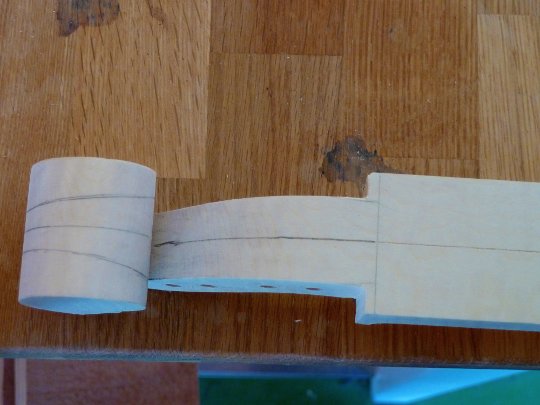
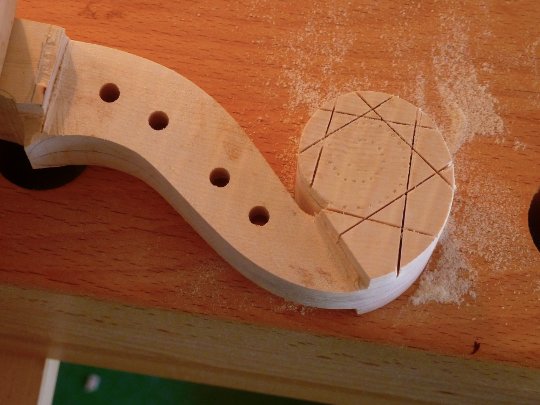
The next step is to carve the first turn of the scroll. We do this by using a saw and chisel to remove the waste.

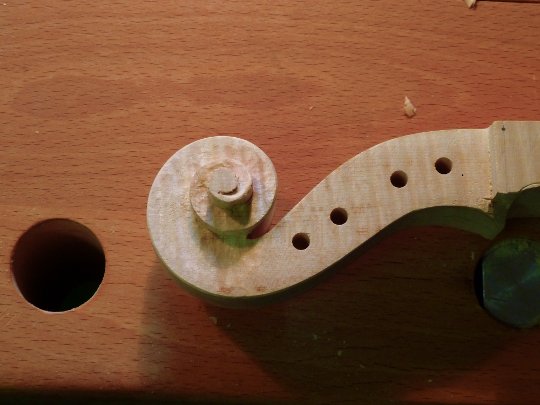
We clean this up to the line and do the same thing for the second turn.

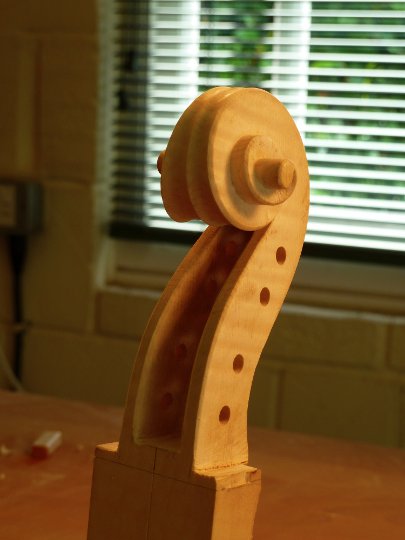
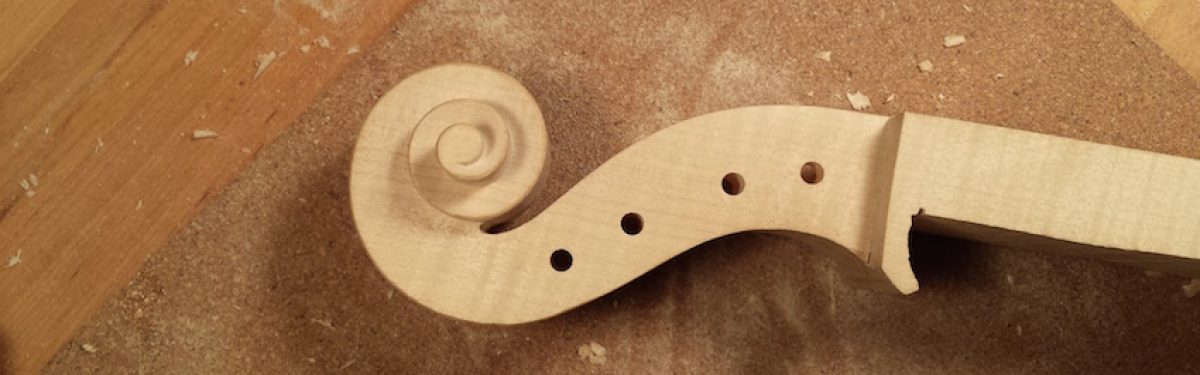
Finally, we under-cut the volute, complete the inside of the peg box and flute the scroll. The scroll is now complete and we are redy to finish off the neck.

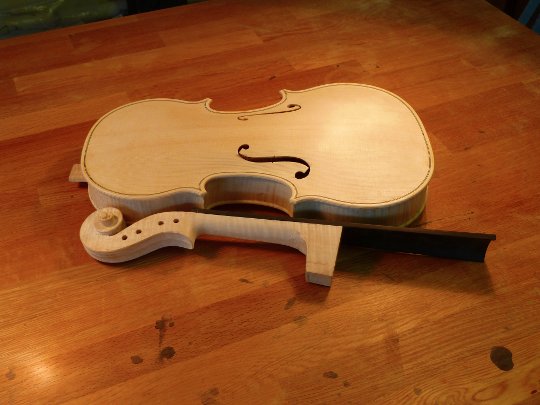
The last step is to prepare and attach a fingerboard and nut and remove the waste wood from the neck.

We can’t completely finish the neck until after it is attached to the body but we can shape most of the neck and finish off the chin of the scroll. We are now ready to attach the neck to the body.